Subtitle: Answers to 24 common questions about calibration, maintenance, filter selection, and flow rate problems.
Introduction
The high volume air sampler is the standard instrument for Total Suspended Particulate (TSP) monitoring. It operates at flow rates of 1.1-1.7 m³/min, collecting particulate matter on an 8″×10″ filter over 24-hour sampling periods.
Yet even experienced operators encounter persistent problems: flow calibration drift, unexplained flow rate drops, filter contamination, and carbon brush wear that silently biases metal measurements. This guide compiles 24 frequently asked questions, organized by operational scenario, with answers grounded in EPA reference methods and manufacturer specifications.
H2: Calibration & Flow Verification
H3: When must the sampler be calibrated?
Calibration is mandatory in five situations: upon initial purchase or installation; after major maintenance including motor or carbon brush replacement; whenever the flow measuring device (rotameter or continuous recorder) has been replaced or repaired; and whenever a one-point calibration check deviates from the established calibration curve by more than ±5-7%. The U.S. EPA also recommends that each orifice transfer standard be recalibrated annually.
H3: How do I perform orifice calibration?
Connect the orifice transfer standard to the sampler inlet, ensuring no leaks between the orifice unit and the sampler. Connect a manometer to the orifice pressure tap. Operate the sampler for at least 5 minutes to reach thermal equilibrium. Adjust the variable resistance to achieve five evenly spaced flow rates across the range of 1.0 to 1.8 std m³/min, with at least three points in the specified 1.1-1.7 m³/min interval. Record the pressure drop (ΔH) and flow rate indication at each point. Calculate standard flow rate (Qstd) using barometric pressure and ambient temperature corrections.
Acceptance criteria typically require the correlation coefficient (r) of the calibration curve to exceed 0.990 after a five-point calibration.
H3: What if the flow indicator reads inaccurately?
Rotameter errors can result from physical damage, dirt deposition on the flow tube, or flow restrictions in connecting tubing. If the narrow section of the rotameter has accumulated debris, carefully clean it with a fine needle without damaging the flow needle. After cleaning, the rotameter must be recalibrated.
H3: How should automatic calibration failure be handled?
If automatic calibration exceeds 10 minutes with the motor cycling continuously, the auto-calibration has failed. Manual calibration is required. Additionally, if the “AS-LEFT” reading displayed after auto-calibration is inconsistent, manual calibration should be performed.
H2: Filter Selection & Handling
H3: Which filter type suits different analysis goals?
Glass fiber filters are the standard choice for TSP mass measurement. However, they are not recommended for ionic analysis because SO₂, HNO₃, and NH₃ convert to sulfate, nitrate, and ammonium on the glass fiber surface, causing erroneous results. For metal analysis, TX40 (PTFE-coated glass fiber) filters are recommended. Cellulose fiber filters, such as Whatman 41, offer low blank values suitable for metal analysis.
Quartz fiber filters are used in carbon analysis networks but adsorb organic vapors, creating an organic carbon bias that requires field blanks or backup filters for correction.
H3: How should filters be weighed and handled?
High volume filters are weighed to the nearest 0.1 mg. Each batch requires independent verification of final weights for 10% of filters; if deviation exceeds ±2.0 mg, the entire batch must be reweighed. At least one blank filter should be weighed and processed for every 1 to 10 filters used.
H3: Can filters be folded before sampling?
No. Filters must not be folded before sampling. Folding can damage the filter surface and create pathways for particle loss.
H3: How many blank filters are needed?
Blank filters should represent approximately 5% of the total sample count analyzed annually. It is recommended to reserve at least one filter from each box of 50 or 100 for blank determination.
H2: Motor & Carbon Brush Maintenance
H3: How often should carbon brushes be replaced?
Carbon brushes must be replaced after 400-500 hours of operation, and the sampler must be recalibrated following replacement. Some operational protocols recommend replacement every 6 months to prevent commutator damage and motor burnout. However, brush lifespan varies widely—from one day to one month—depending on operating conditions.
H3: What contamination problems do carbon brushes cause?
Carbon brushes and copper commutators generate particulate emissions during operation. One study measured carbon emissions of 2.2-2.7 mg/hr and copper emissions of 0.47-0.59 mg/hr from high volume samplers. These metal particles are captured on the filter and can cause anomalously high atmospheric copper concentration measurements. For this reason, high volume samplers are not suitable for atmospheric copper determination.
H3: What is the typical carbon brush lifespan?
Brush lifespan is highly variable, ranging from approximately one day to one month depending on operating conditions, motor load, and environmental factors.
H2: Operation & Flow Rate Issues
H3: How should flow rate anomalies during sampling be investigated?
If flow rate or post-sampling mass concentration values appear anomalous, check the flow indicator for abnormalities, inspect the sampler for leaks, and verify power supply voltage stability. If the anomaly occurs early in the sampling period, normal operation must be confirmed before starting collection. If the anomaly is discovered at the end of sampling, the sample must be preserved with proper documentation and a new sample collected.
H3: Why does flow rate decrease as the filter loads?
Filter loading increases airflow resistance. Oily substances from photochemical smog or wood smoke can further impede airflow, causing unstable suction rates. Heavy fog or high humidity can cause the filter to absorb moisture, severely reducing airflow. Some samplers use bypass flow control systems to maintain constant flow, but these systems may underestimate concentrations when particulate levels exceed 300 μg/m³ (24-hour average).
H3: What precautions apply when using a portable generator?
High volume sampler motors are particularly sensitive to voltage fluctuations. Voltage changes cause proportional motor speed changes, which produce equivalent fluctuations in airflow. Frequency variations have the same effect. Test voltage and frequency stability before using a portable generator with the sampler.
H3: How often should the sampler be inspected?
Regular inspection should include: checking power cords for cracks, wear, or damage; verifying mounting hardware security; inspecting the filter holder and rubber gaskets. A blurred or irregular particulate boundary on the filter indicates possible gasket leakage and the gasket should be replaced.
H2: Siting & Installation
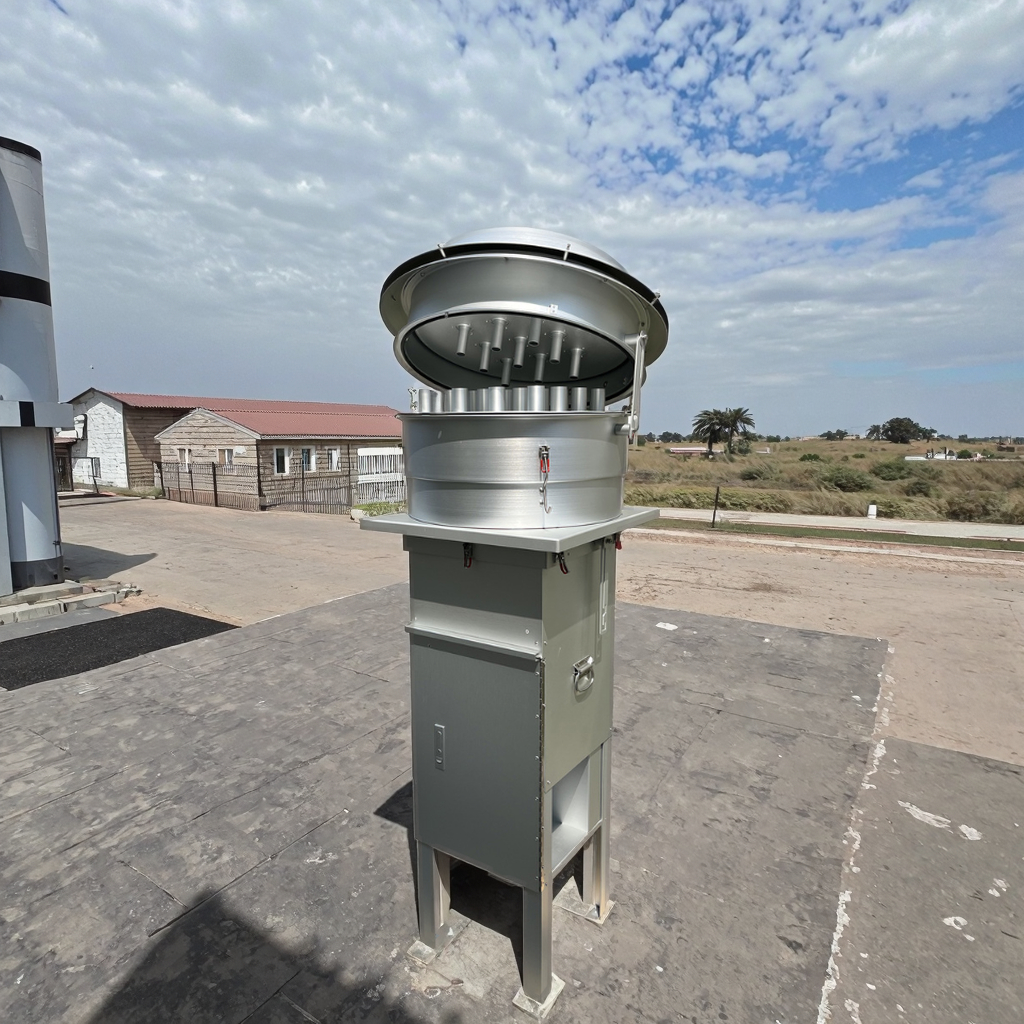
H3: At what height should the sampler inlet be installed?
The sampler inlet should be positioned 2 to 7 meters above ground level. If mounted on a roof or other structure, the inlet should be at least 2 meters from walls or parapets and away from building vents and flues. The filter should be approximately 3 to 4 feet (0.9-1.2 m) above the mounting surface.
H3: What are the distance requirements from obstacles?
The sampler should be at least twice the height of any obstacle away from trees and buildings. At least three of four wind quadrants should be unobstructed to minimize biased results from eddy currents.
H3: What installation considerations apply for metal analysis?
Ensure that motor exhaust does not enter the sampling inlet. The sampler should be located away from local particulate sources such as unpaved roads and portable generators, unless that source is the monitoring target.
H2: Sampling Duration & Frequency
H3: What is the standard sampling period?
The standard sampling period is 24 hours, typically following a midnight-to-midnight schedule. Sampling frequency is commonly every 6 days for regulatory compliance in North America, unless otherwise agreed with the regulatory agency.
H3: What frequency is recommended for long-term trend monitoring?
For long-term concentration trend determination, weekly sampling is recommended. Sampling duration should not exceed one week. If high particulate loading causes rapid flow decrease that cannot be compensated, continuous 3-day samples may be collected.
H3: What if the goal is source identification?
For source identification affecting receptor points, consecutive daily samples should be collected to provide sufficient data resolution.
H2: Applicability & Limitations
H3: Is the high volume sampler suitable for semi-volatile organic compounds (SVOCs)?
A high volume sampler equipped with polyurethane foam (PUF) is not suitable for measuring organochlorine compounds and 2-3 ring polycyclic aromatic hydrocarbons with vapor pressures greater than approximately 0.2 Pa. These compounds break through the PUF sampling medium at relatively low sampling volumes (170 m³) and ambient temperatures.
H3: Can it be used for ultra-trace aerosol iron measurements?
In remote marine air masses and similar ultra-low concentration environments, the high volume sampler may not be suitable. One study detected significant iron contamination in monthly exposed blank filters from passive deposition of local soil, plant material, and insects. Without a mechanism to seal the sampler when baseline sampling conditions are not met, the high volume sampler is unsuitable for such applications.
H3: What is the relationship between TSP, PM₁₀, and PM₂.₅?
TSP (Total Suspended Particulate) is determined from the filter catch of a standard high volume sampler. IP (Inhalable Particulate) includes particles with aerodynamic diameters less than 15 μm. FP (Fine Particulate) includes particles less than 2.5 μm. TSP corresponds to the high volume sampler filter catch; IP corresponds to the SSI filter catch.
H2: Frequently Asked Questions
When must a high volume air sampler be calibrated?
A high volume air sampler must be calibrated upon initial purchase, after major maintenance such as motor or carbon brush replacement, whenever the flow measuring device has been replaced or repaired, and whenever a one-point calibration check deviates from the calibration curve by more than ±5-7%. The transfer standard should be recalibrated annually.
How often should carbon brushes be replaced?
Carbon brushes typically require replacement after 400-500 hours of operation, with recalibration required afterward. Some protocols recommend replacement every 6 months to prevent motor damage. Brush lifespan varies from one day to one month depending on operating conditions.
What causes flow rate to decrease during sampling?
Flow rate decreases primarily due to increased airflow resistance as particles accumulate on the filter. Oily substances from smog or wood smoke, and moisture absorption by the filter in high humidity, can further reduce flow. Flow control systems may underestimate concentrations above 300 μg/m³.
Which filter type should be used for metal analysis?
TX40 (PTFE-coated glass fiber) filters are recommended for metal analysis. Cellulose fiber filters such as Whatman 41 also offer low blank values suitable for metal analysis. Glass fiber filters are not recommended for ionic analysis due to artifact formation.
At what height should the sampler inlet be installed?
The inlet should be 2 to 7 meters above ground level, at least 2 meters from walls or parapets if roof-mounted, and at least twice the height of any obstacle away from obstructions. At least three of four wind quadrants should be unobstructed.
Can a high volume sampler measure SVOCs?
No, PUF-equipped high volume samplers are not suitable for organochlorine compounds or 2-3 ring PAHs with vapor pressures above 0.2 Pa, as these compounds break through the PUF medium at low sampling volumes (170 m³).
What sampling frequency is recommended?
Standard frequency is every 6 days for regulatory compliance. For long-term trend monitoring, weekly sampling is recommended. For accurate annual means, 26 bi-weekly samples are sufficient.
How do I know if the filter has leaked?
A blurred or irregular particulate boundary on the filter indicates a possible gasket leak. For PUF samplers, a Magnehelic reading exceeding 60-70 inches (or 30-45 inches for combined PUF resin) indicates a leak requiring inspection of the sampling module seating.
H2: Reliable Data Starts with Proper Calibration and Maintenance
High volume air samplers are durable instruments, but their data quality depends entirely on disciplined calibration, timely carbon brush replacement, and correct filter selection. The questions in this guide represent the most common operational challenges—and the solutions that prevent biased results, instrument downtime, and regulatory non-compliance.
Whether you need calibration services, replacement carbon brushes, or filter supplies, our technical team can help you maintain compliance and data integrity.
CTA: Request Calibration Service or Consumables Quote